
 --
--

PLEASURES OF NEW ORLEANS
TALES OF THE COCKTAIL AND OTHER TOURIST THRILLS
It was an especially languorous Tuesday, in the middle of a particularly steamy July in New Orleans, where summer is spelled m-u-g-g-y…or is it spelled s-w-e-l-t-e-r-i-n-g? High noon and your sunglasses fog up when you walk outdoors.
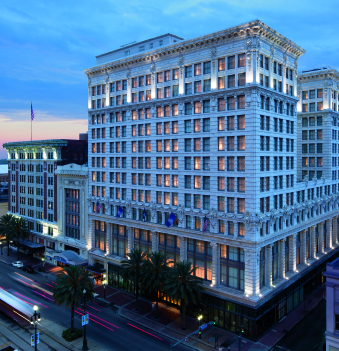
Never mind the weather outside, what mattered to me was what was happening inside, in this case, at the majestic Ritz Carlton, the home base for the extraordinary Tales of the Cocktail extravaganza. Begun in 2002, as a kind of boozy walking tour of historic bars in the Big Easy, the event morphed into its present format—a six-day festival toasting all things cocktail and alcohol-related. This year, July 19-24, attended by upwards of 20,000 from all over the world, well over 50 countries, TOTC hosts anyone even marginally interested in the alcoholic beverage industry: importers, bar owners, drink consultants, chefs, bar tenders, marketing execs, distributors, alcohol companies, waitstaff, menu designers, serious connoisseurs, and the merely curious—it is the go-to event for alcoholic excitement, exploration, and enthusiasm.
During its six days, there were over 400 events you could attend, hosted by nearly 300 brands/exhibitors; nearly fifty percent of these events were hosted by companies from far-flung ports of call—Peru, the Netherlands, India, and Australia, among the many. As you can see, this is a place not just for fun, but for serious education.
In the Bookstore & Bitters Marketplace, alone, there were hourly happenings. As you scroll through the TOTC program, which seems to go on forever, you’ll realize it’s tough to make decisions as to where to plant yourself each hour: panels, lectures, workshops, discussions, book signings, demos, classes, tastings, participatory events, cooking demos, and, of course, parties galore at night.
My favorite fete was the Spirits of the Galaxy: A Celestial Celebration by William Grant & Sons, which took place in the Orpheum Theater, where all the seating had been removed; acrobats and flying ballerinas swung from the rafters; dry ice machines sent out billows of other-worldly mist; headbands with mini Martian-like lights illuminated attendees’ tresses; revolving stage lights transformed the mood; and an ever-present pulsating beat set your heart racing. If ever I needed a time machine to take me back to my halcyon and wild days of carefree youth, this was that moment.
Some of your choices during the day might have included such seminar topics as:
- Laws of Extraction: Liquid Brilliance from Solid Ingredients
- Filthy Animals, Spirited Drinking
- Fermentation 101
- Unlocking Synesthesia: A Seduction of the Senses
- Jefferson’s Bourbon Presents: Ocean & Oysters
- Mix Smarter, Not Harder: The Batching Playbook for Bars
- The Third Annual Three Martini Lunch at Galatoire’s with Clemente Bar
- Louche: The French Quarter Absinthe Tour
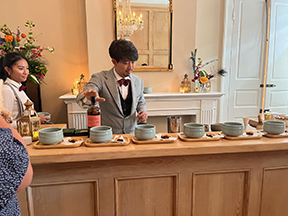
Two seminars I thought were sensational: Nikka Whisky presents Highballs ‘N’ High Tea, orchestrated by master Japanese showman-mixologist, Takuma Watanabe, from the legendary Martiny’s in New York. He coalesced the Big Easy and the Big Apple, creating an alchemic blend of Nikka’s coffee grain whisky and matcha tea into a sublimely ambrosial brew. The other seminar that was other-worldly was the Step into Our Library: A Spirited Chapter Featuring Sazerac’s Global Whiskey Portfolio. Here, they tell me, “Distilling is a science; blending is an art.”
THE GENIUS OF JOE BAUM
On that lazy Tuesday, I chose a group discussion, entitled, The Genius of Joe Baum and His Restaurants: The Past Informs The Future, featuring panel members Julie Reiner, Jeffrey Pogash, Charles Baum, Dale DeGroff. I eagerly queued up early to snag a seat, as this was likely to be a standing-room-only event. Baum, in case you didn’t know, was dubbed, by respected food writer and critic Mimi Sheraton, “the Cecil B. DeMille of restaurateurs.” There was a time when several of his near-mythical creations, including Windows on the World, the Rainbow Room, the Four Seasons, and Tavern on the Green, were the highest-grossing restaurants in New York City.
I had a particularly warm spot in my heart and gut for him, because as a tot, I was brought to one of his fantastic, phantasmagoric creations, The Newarker, located in Newark Airport. Don’t gasp. This was a destination restaurant, the way the majestic, ormolu-encrusted Le Train Bleu is a terminus at the Gare de Lyon in Paris.
Baum was likely the first restaurateur-showman to put fire tableside—flaming shish kebabs, crêpes Suzettes, and a seductive dessert that I remembered had something to do with snowballs—an ice cream concoction with, wait for it, sparklers! This was unheard of then. But Baum dreamed it up to dazzle his customers. It was the happiest birthday I ever spent. I remember that the grown-ups ordered three of them for the table, much to my five-year-old delight! And I think I might have had my very own. Proust had his petites madeleines, but I had Joe Baum’s Snow Balls.
A careful look at a menu online, from back then, shows that it was called Toasted Coconut Snow Ball Chocolate, and alongside that, anisette is mentioned, which I certainly know I did not get! It was a whopping 65 cents, ten cents less than both the martini and Manhattan cocktails! Also, worth mentioning, the dessert menu featured Sanka for 40 cents, followed by a Flaming Café Hennessy, for a buck-fifty. Obviously could not resist putting flambé on everything!
It is interesting to note that from a period postcard from the Newarker, Baum promotes it as “Newark’s window on the world.” A harbinger of something to come decades later.
And, so, I was here at the Ritz to relive that tasty Snow Ball moment…and learn more about Joe Baum and his dreams. Celebrated mixologist Dale DeGroff, a Baum acolyte, whom Baum dispatched to Europe to study cocktails, offered many heartwarming stories, as did Baum’s son, Charles. This panel did not disappoint, and among the many attendees were giants in the culinary realm, many owing their careers to the farsightedness of Baum’s genius. “Clearly Joe’s history is the history of restaurants in New York in the second half of the 20th century,” notes Tim Zagat, co-founder of the renowned Zagat Restaurant Surveys.
Had I not been hell bent to hear about Baum, I could have attended nine other events that very hour. You will not get bored or go hungry or thirsty at the TOTC.
MUSEUM MAGIC
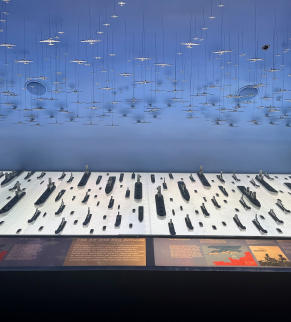
I was in the city, of course, to imbibe more than alcohol. I took a break from spirits education to visit a favorite museum, that has seemingly cloned itself—the National WWII Museum. When I was there last, it featured but two buildings, and now, across its six-acre campus, it offers six buildings. Its website notes that it is a “compelling blend of sweeping narrative and poignant personal detail,” and so it is. Allow enough time to absorb it all, as there are immersive exhibits, multimedia experiences, and an expansive collection of artifacts and first-person oral histories, that all combine to conjure up a picture of what the Museum notes is “the war that changed the world.”
The film Beyond All Boundaries, narrated by Tom Hanks, is dubbed a 4-D experience. The Museum’s web site carefully lays out ideal visits for two hours, a half-day, or a full day and I’d advise following one of its plans. The museum suggests that you head to the L.W. “Pete” Kent Train Car Experience, which is located in the Louisiana Memorial Pavilion, where you can register your dog tag and follow one person’s service journey through the war.
I also enjoyed the Southern Food & Beverage Museum, SoFAB, which was founded in 2004 by Elizabeth Williams, who wanted a place where the intersection of culture and food could be studied. The museum began with pop-ups around the city, but in the summer of 2008, it found a home in Riverwalk Marketplace, which is where I first encountered this jewel.
The Museum of the American Cocktail, MOTAC, originally located in the Pharmacy Museum in the French Quarter, became a permanent part of SoFAB’s collection in 2014. MOTAC, which is still housed in SoFAB, features a collection of rare spirits and books, as well as a presentation on the cocktail’s place in history. After its first exhibit, the public began donating family artifacts, and today all that memorabilia constitutes a fascinating look at packaging, tastes, style, and trends.
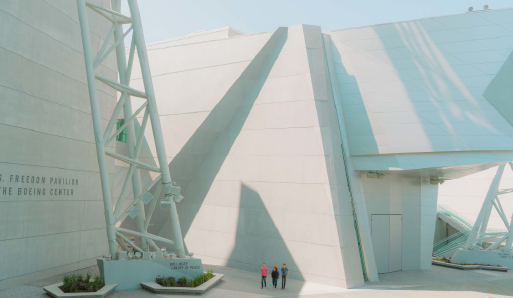
Another museum that was a must for me was the Museum of the Southern Jewish Experience, which explores the many ways that Jews in the American South influenced, and were influenced by, the distinct cultural heritage of their adopted country. If you have had the pleasure of seeing the play The Lehman Trilogy, then you have likely garnered a tiny kernel of just how many Jewish immigrants settled in the American South. In 2012, the museum, which had been founded in Mississippi, moved to New Orleans and now houses over 4,000 artifacts, many featured in the permanent exhibits, which highlight the unique and remarkable history of Southern Jews.
TIME TO EAT!
I barely know where to begin to praise all the extraordinary food that this city offers. There are so many well-known restaurants here, it’s hard to choose, but given that I had a limited number of lunches and dinners, choose, I did.
Thus, lunch on the way to the WWII Museum was at Herbsaint, Chef Donald Link’s jewel, since 2000, and which earned James Beard recognition for him, as Best Chef in the South in 2007. My chicken breast offered layers of flavoring, and it sat floating on a bed of tasty zucchini. Since it opened, this restaurant is consistently in the Times-Picayune’s annual list of New Orleans’ 10 Best Restaurants.
Dinner that night was at Mr. B’s Bistro, another mainstay in New Orleans, and where I had the absolute best pecan pie, that dwarfed all else I ate, and trust me, everything else was pretty spectacular.
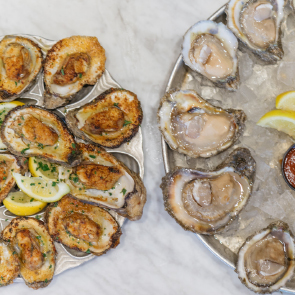
As Wednesday rolled around, it meant more good eatin’. Dickie Brennan’s Steakhouse proffered the most colossal Gulf shrimp I’d ever seen, with New Orleans-style barbecue sauce, and a stone-ground grit cake. Food of the gods. I barely had room for the steaks that were coming. Another bull’s eye was lunch at Dickie Brennan’s Bourbon House—the food is so flavorful, you’ll not want to put your fork down. And, yes, as you might expect, lots of oysters, crab, shrimp, and rich, succulent sauces. Each meal eclipses the previous one.
One dinner at the Commander’s Palace—a city mainstay—was even more memorable, but not for reasons you’d guess: During a loud and eventful thunderstorm, the lights all blew! And, yet, somehow, the kitchen and the waitstaff managed to present us complete meals! All the while, a determined squall pelted the glass wall adjacent to our table. It was a feat of legerdemain. And again, delicious doesn’t even begin to describe the meal.
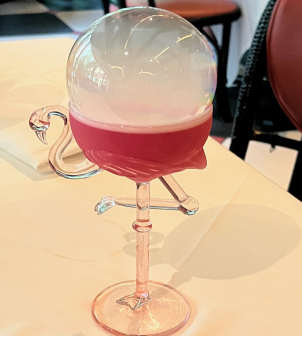
The last meal—I thought of it as Last Supper, because it was so amazing—was at Brennan’s, and it was a stage show. The cocktails were each a marvel of science and chemistry: Whatever you do, order the Flamingo, with Chopin Vodka, Monkey 47 Schwarzwald Gin, dragonfruit, lemon, and Tattinger “La Francaise” Champagne, and the Birdcage, a smoked old fashioned made with Rabbit Hole Dareringer bourbon, Angostura Bitters, orange, and cherry. They will set you back a coupla’ bucks, but every dime will be worth it—for me it was a memorable way to end a glorious New Orleans sojourn.
SLUMBERING IN STYLE
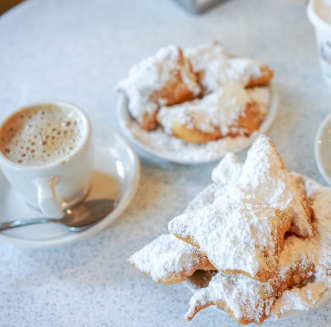
I chose for my first two nights, the elegant Ritz Carlton, a Beaux Arts grande dame in the French Quarter, with 528 rooms. All are gorgeously appointed, as you’d expect from an antebellum mansion, and it was a delight to just fall out of bed and topple into TOTC. The staff was gracious, knowledgeable, even as they were overwhelmed with thousands of guests coming and going. Breakfasts were plentiful, and the morning highlight for me was an ethereal beignet.
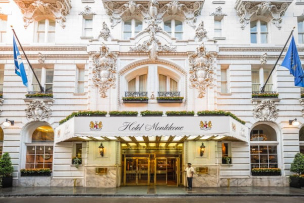
My last two nights, I luxuriated in another NOLA stately dowager, the Monteleone, which celebrates its 140th birthday this year. The showpiece of Sicilian immigrant Antonio Monteleone, this majestic property offered, in 1908, “220 guest rooms with electric lighting, and attached bathrooms,” and in 1909, it touted “steam heat, private baths, electric elevators, and electric lights.” The crown jewel of the hotel is the charming Carousel Bar, where the legendary Vieux Carré cocktail was invented. The hotel is a designated National Literary Landmark by the American Library Association.
Additional Info: neworleans.com; talesofthecocktail.org; ritzcarlton.com; hotelmonteleone.com
All photos courtesy of New Orleans & Company; the Ritz Carlton; the Monteleone