





The MAgic of One Art Space
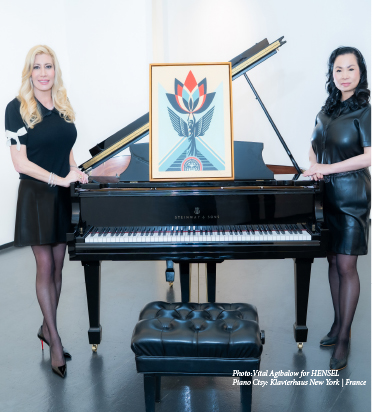
MaryAnn Giella McCulloh and Mei Fung
How MaryAnn Giella McCulloh and Mei Fung are leading the Downtown Gallery Renaissance
One Art Space has become one of those rare downtown New York galleries that feels connected to the city around it. In Tribeca, described as a “must-visit destination for gallery hoppers”, where polished storefronts and cultural cachet often go hand in hand, the gallery at 23 Warren Street has built its identity on something more durable: a genuine interest in bringing different eras, energies and audiences into the same room.
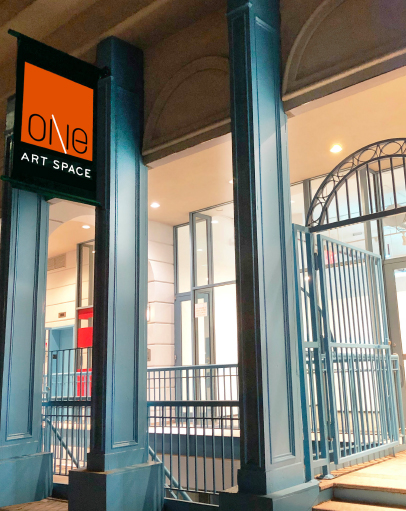
Since opening in 2011, One Art Space has used its street level, glass front setting to invite people in rather than keep them at a distance, creating a space where collectors, artists, neighborhood regulars and the merely curious can meet on equal footing.
That openness is central to the gallery’s mission. One Art Space describes itself as a place where the giants of art history and the visionaries of art’s future come together, and its recent programming suggests that is more than branding language. The gallery has become known for exhibitions that move comfortably between museum caliber names, street art credibility, contemporary experimentation and community centered group shows. In a New York art landscape that can sometimes feel rigidly segmented, One Art Space has made range part of its appeal.
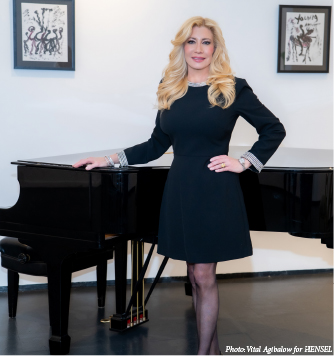
The current chapter of the gallery is being shaped by co-owners MaryAnn Giella McCulloh and Mei Fung. McCulloh, sister of founder Dan Giella, grew up in a deeply creative environment. Her father, Joe Giella, was a legendary comic book artist hired by Stan Lee to bring Batman and other classic characters to life, and whose artwork featured on two USPS stamps issued in 2006 as part of the DC Comics Superheroes release. That blend of popular culture and serious visual craft still feels embedded in the gallery’s sensibility. Mei Fung, who worked closely with Dan Giella, has helped carry the space forward while preserving its community minded spirit. Together, they have positioned One Art Space as a downtown venue that is neither forbidding nor lightweight, a balance that is harder to strike than it looks.
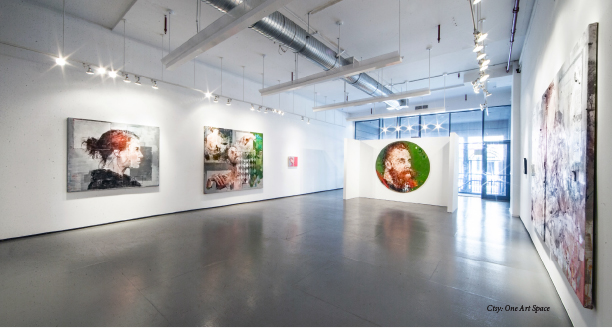
The past several months has offered a clear illustration of that curatorial approach. Last fall, One Art Space presented “An Empire Fallen” by Al Diaz, the pioneering downtown figure known for his connection to New York’s graffiti and street culture history, collaborating with Jean-Michel Basquiat on the influential SAMO® graffiti tag in 1970s New York. The exhibition examined collapse, reinvention and the uneasy relationship between the street and the institution. It was the kind of show that underscored the gallery’s willingness to embrace artists whose work carries cultural memory as well as visual punch.
Another champion of the gallery and, in One Art Space’s view, among the leading street artists in the United States, is Shepard Fairey. One Art Space has shown and supported street art’s most recognizable voices, and MaryAnn does not hesitate when asked who defines the category in America. Shepard Fairey is a best known for the iconic Obama HOPE 2008 Campaign Poster and the legendary “André the Giant has a Posse” sticker that later evolved into the OBEY GIANT art campaign.
Soon after came Sung Min Jang’s “Thread of Memory,” a November exhibition that shifted the tone while preserving the emotional intensity. Jang’s work used yarn as both material and metaphor, exploring healing, connection, memory and the persistence of human feeling, her exhibition as part of a group of artists led to One Art Space being awarded “Red Dot” best new exhibitor. Where Diaz brought urban urgency and text driven symbolism, Jang brought meditation and tenderness. Seen together in the gallery’s broader arc, the exhibitions suggested a program interested not in one school or style but in the emotional and intellectual possibilities of contrast.
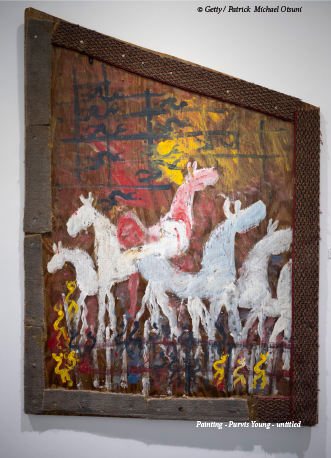
Following a pre-reception at Art Basel Miami Beach at the Hotel Croydon, One Art Space turned to Purvis Young for a headline Black History Month exhibition this February that brought several of the acclaimed artist’s works to New York. Young, whose paintings are held by institutions including the Metropolitan Museum of Art, the Whitney Museum of American Art and the Smithsonian American Art Museum, remains a singular figure in American art, celebrated for work that fused social observation, spiritual resonance and raw immediacy. By presenting Young in Tribeca, the gallery reaffirmed its interest in artists whose legacies are secure, but whose work still feels urgent in the present.
March continued that momentum with Women’s History Month programming, including the 10th edition of One Art Space’s International Women’s Day exhibition and the gallery’s “She Is” anniversary presentation. Led by women gallerists and centered on women artists working across painting, photography, sculpture and digital media, the exhibitions further emphasized One Art Space’s longstanding investment in equity and visibility. The gallery’s history with the National Association of Women Artists also gives additional weight to that commitment, and gallery notes suggest NAWA, originally founded in 1889, remains part of the conversation ahead.
Now the focus turns to April, where One Art Space is set to host two exhibitions spotlighting the work of Michael Fredo and Chuck Connelly, two names that neatly express the gallery’s larger identity.
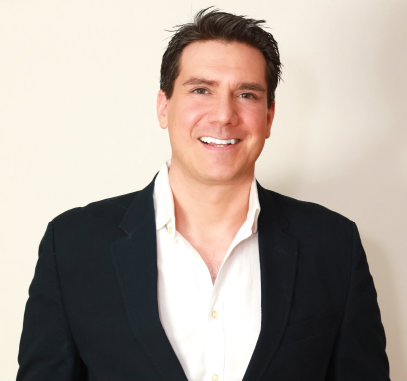
Michael Fredo represents imaginative forward motion, with “Moonlighters” extending beyond sculpture into a broader creative world, holding an opening reception hosted by Tommy Hilfiger and Andy Hilfiger.
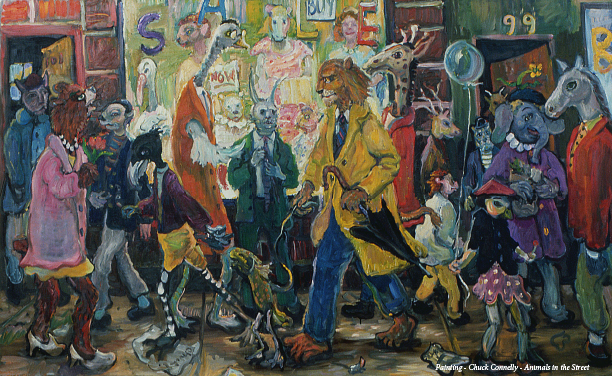
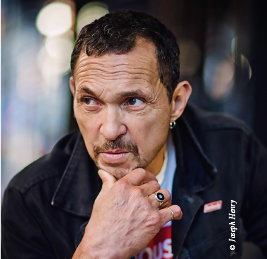
Chuck Connelly, by contrast, stands as a storied New York figure whose work carries the weight of downtown art history. Put together, they form the kind of pairing One Art Space does especially well: one eye on legacy, one eye on discovery. While a number of his works reside in the Metropolitan Museum of Art and the Brooklyn Museum, this new retrospective includes the display of one of Connolly’s masterpieces, “Animals in the Street”.
And there is more ahead. Gallery notes point to future plans involving NAWA and a major street and graffiti art exhibition expected to draw marquee names and high-profile attendees. That prospect feels entirely in character. One Art Space has never seemed interested in choosing between seriousness and scene, between scholarship and spectacle, between established power and emerging ambition. Its strength lies in understanding that New York art culture has always thrived on collision.
At a time when many galleries lean heavily on exclusivity, One Art Space continues to make a case for access, vitality and surprise. In Tribeca, that still counts for something. More than a showroom, it has become a meeting point between downtown history and whatever comes next, which is another way of saying it still feels like New York. placing the Gallery as their mission statement puts it, “where the giants of art history and the visionaries of art’s future come together in One Art Space”.