

 --
--

The Chancery Rosewood
London’s Former U.S. Embassy Becomes Mayfair’s New Power Address
London rarely retires a landmark. It repurposes it. In Mayfair’s Grosvenor Square, a building once defined by diplomacy has taken on a new role in the city’s cultural life. The Chancery Rosewood has opened in the former U.S. Embassy, introducing an all-suite hotel that pairs a midcentury architectural pedigree with a contemporary emphasis on dining, art, and wellness.
The building’s origin story is part of its appeal. Designed in 1960 by Finnish American architect Eero Saarinen, it is recognized for its distinctive exterior geometry and its place in London’s postwar architectural landscape. Its latest chapter follows a meticulous restoration led by British architect Sir David Chipperfield, with development by Qatari Diar Europe LLP. The result is a return to prominence for a Grade II listed structure, updated for modern use while keeping its identity intact.
One of the most recognizable details remains high above the square. A gilded eagle sculpture by Theodore Roszak, made from aluminum associated with B 52 bomber aircraft, presides over views that stretch from the greenery of the square toward London’s skyline. It is a flourish that nods to the building’s American ties without turning the property into a museum piece. The point is not nostalgia. It is continuity, with the hotel positioning itself as a place where history becomes atmosphere rather than theme.
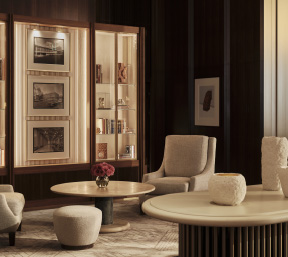
Inside, the approach is quiet and composed. French interiors architect Joseph Dirand designed the hotel’s 144 suites and communal areas with an emphasis on proportion, texture, and calm. Floor to ceiling windows draw daylight deep into the building, and warm tones, paired with subtle metallic accents, are used to complement the original stone façade. The effect is residential in spirit, even in the larger public spaces, with the building’s strong architectural lines softened by materials that invite lingering.
The building’s origin story is part of its appeal. Designed in 1960 by Finnish American architect Eero Saarinen, it is recognized for its distinctive exterior geometry and its place in London’s postwar architectural landscape. Its latest chapter follows a meticulous restoration led by British architect Sir David Chipperfield, with development by Qatari Diar Europe LLP. The result is a return to prominence for a Grade II listed structure, updated for modern use while keeping its identity intact.
One of the most recognizable details remains high above the square. A gilded eagle sculpture by Theodore Roszak, made from aluminum associated with B 52 bomber aircraft, presides over views that stretch from the greenery of the square toward London’s skyline. It is a flourish that nods to the building’s American ties without turning the property into a museum piece. The point is not nostalgia. It is continuity, with the hotel positioning itself as a place where history becomes atmosphere rather than theme.
Inside, the approach is quiet and composed. French interiors architect Joseph Dirand designed the hotel’s 144 suites and communal areas with an emphasis on proportion, texture, and calm. Floor to ceiling windows draw daylight deep into the building, and warm tones, paired with subtle metallic accents, are used to complement the original stone façade. The effect is residential in spirit, even in the larger public spaces, with the building’s strong architectural lines softened by materials that invite lingering.
Accommodation is organized around a hierarchy of suites, including Junior Suites, Suites, Signature Suites, and a collection of Houses designed for longer stays, larger parties, or hosting. Several are named for Americans linked to the building’s past, including the Saarinen House, John Adams House, Kennedy House, and the Chancery House. At the top of the property sit two penthouses, Charles House and Elizabeth House, each with a landscaped terrace, dining space, kitchen and bar set up, and a primary bedroom anchored by a dramatic marble bath.
Service is designed to feel less procedural and more personal. Stays are offered with flexible arrival and departure times, reducing the stop start cadence of the typical hotel schedule. Instead of a conventional check in at a front desk, guests are met on arrival and guided directly to their suites. Transfers in a house car are built into the experience, and guests in the Signature Suites and Houses have the option of private butler support.
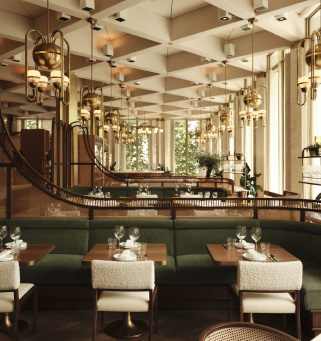
Dining is central to the property’s identity and its ambitions for the neighborhood. The hotel’s eight restaurants and bars are accessible from ground level, encouraging a steady flow that is not limited to overnight guests. The anchor name for many travelers will be Carbone, the New York City favorite making its first European appearance here. Around it, the lineup is designed to read like a map of moods rather than a single culinary statement.
Serra focuses on Southern Mediterranean flavors inspired by the coasts of southern Italy and Greece. Jacqueline is conceived as a tearoom and dessert salon, led by executive pastry chef Marius Dufay, with an emphasis on seasonality and a polished sense of presentation. Tobi Masa marks the London arrival of chef Masayoshi “Masa” Takayama and his modern Japanese cuisine. GSQ plays the role of neighborhood delicatessen, serving coffee, pastries, salads, sandwiches, and shareable snacks, with a takeaway counter and retail pantry touches that make it feel like a daily stop, not a special occasion.
Upstairs, Eagle Bar is positioned as a rooftop destination with a wraparound terrace, cocktails, elevated bar snacks, and music programming developed with a vinyl first East London collective. It is the kind of detail that signals the hotel’s broader strategy: respect the building’s stature but keep the energy current.
That balance continues in the hotel’s art program, which is treated as a living collection rather than décor. The property includes an art concierge and roughly 700 artworks curated with the London based consultancy Cramer and Bell. Pieces span mediums and styles, with commissions created for specific locations throughout the building. Among the artists represented are British painter Sir Christopher Le Brun, whose work appears above a main fireplace, and textile designer Sussy Cazalet, whose pieces are placed in the entrance hall. Within guest suites, artist Anthony Grace was commissioned to create a substantial body of work that references American landmarks, past presidents, and Saarinen’s design legacy.
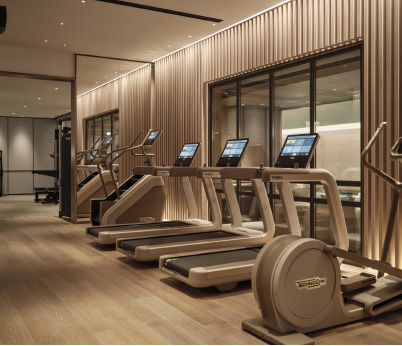
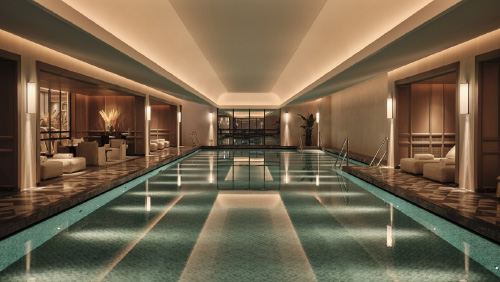
Wellness has been given equal billing. The Asaya Spa sits below ground in a space designed by Yabu Pushelberg and includes a 25-meter (80’) swimming pool, five treatment rooms, and a fitness center equipped with Technogym’s Artis Luxury line. Facilities also include sauna and steam areas, relaxation spaces, and personal training options.
A key differentiator is The Taktouk Clinic, led by Dr. Wassim Taktouk, which integrates dermatological expertise with a broader approach to wellbeing. The spa’s treatment offering also includes partnerships and concepts that bring skincare science and aromatherapy into the menu, alongside more traditional face and body experiences. For Londoners looking for a club like rhythm, tiered memberships are available, offering access to facilities and added benefits such as fitness assessments and preferred booking options.
The hotel is also built for gatherings on a grand scale. A state-of-the-art ballroom is designed to accommodate up to 750 guests, supported by salons, foyer space, and additional event areas that can shift from intimate celebrations to major industry evenings. In a part of London where private rooms and heritage venues abound, the Chancery’s pitch is capacity plus modern infrastructure, wrapped in a building that carries its own story.
The Chancery Rosewood joins Rosewood Hotels and Resorts’ global portfolio, which spans dozens of luxury properties across multiple countries, shaped by the company’s emphasis on reflecting local culture through design and experience. In London, that philosophy lands in a building many people have walked past for years. Now, the doors open for a new kind of visitor, one arriving not with credentials but with curiosity.
For more information visit: www.rosewoodhotels.com/en/the-chancery-rosewood